

Freediving
Build a calm, longer static hold - the foundation under every dive you'll ever make.

Take one short test, and Brizzy calculates your CO₂ and O₂ tables from your own result.
A longer, calmer breath-hold is the quiet superpower behind everything you do at sea.
Build a calm, longer static hold - the foundation under every dive you'll ever make.
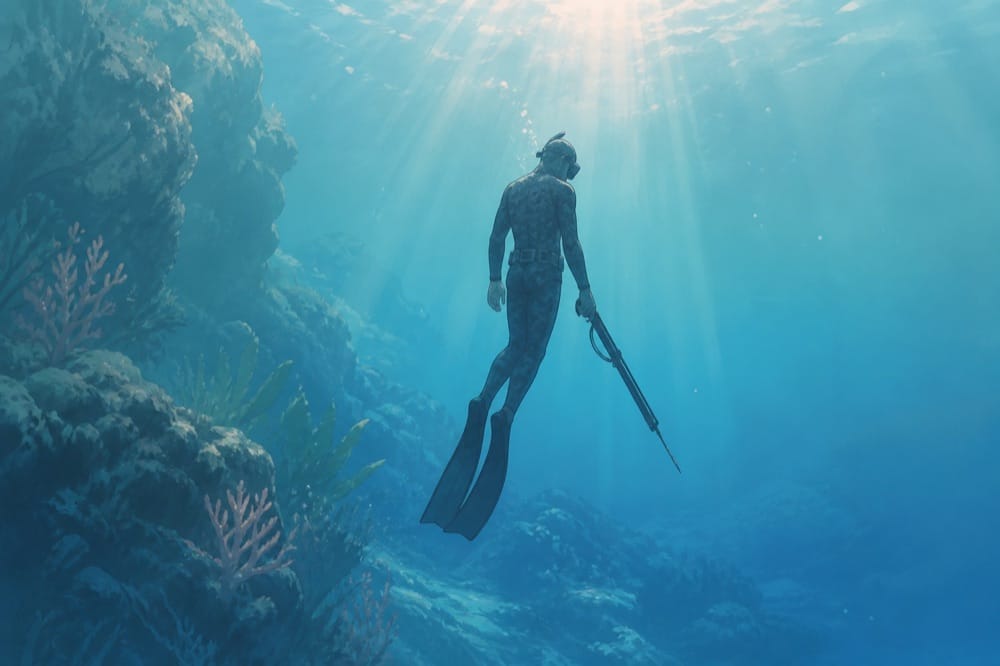
Relaxed bottom time starts on dry land, not at depth. Train the urge before it trains you.
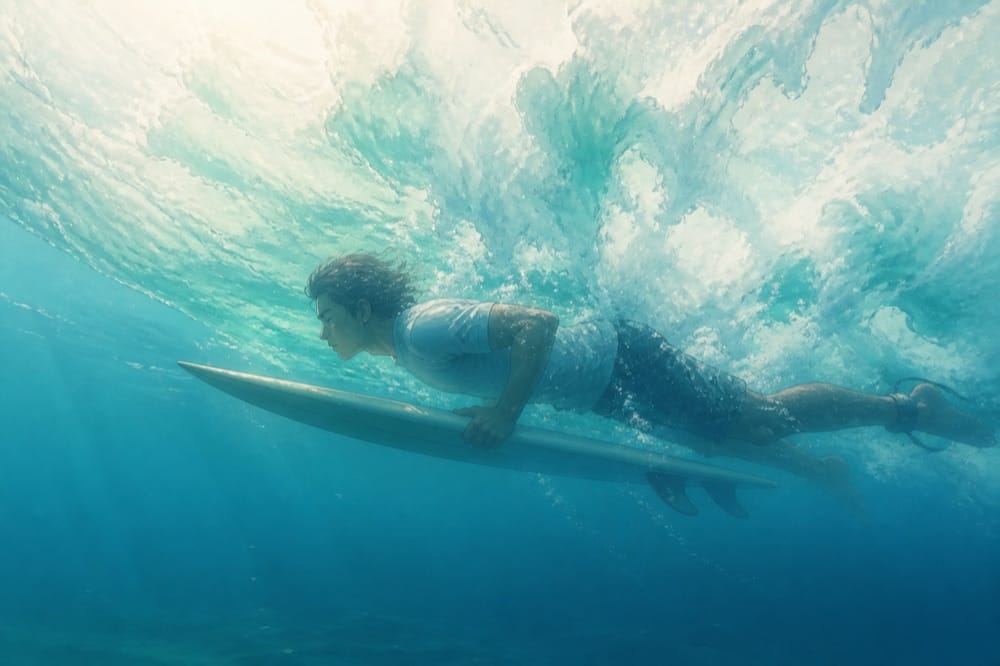
Real hold-downs rarely last beyond 12-15 seconds. Train your calm so the urge to breathe becomes an old friend, not a panic trigger.
Four building blocks, in the order your body actually learns them.
Find your comfortable baseline - a short, guided test. Stop when you need to breathe.
Get used to the urge to breathe. Same hold, shorter rests - your tolerance grows.
Extend your hold, gradually. Longer holds, full rests - never a race.
After the final hold, Brizzy guides three controlled recovery breaths before you return to your natural rhythm.
Watch your capacity grow over weeks of practice.
Real seconds from your own test - not numbers someone guessed for everyone.
When your breath-hold improves, measure again and update your level. Your CO₂ and O₂ tables then recalculate from the new result.
Every table ends with three guided recovery breaths before you return to your natural rhythm.
Calculated from your 1:52 baseline - never someone else's.

Every breathing practice has its own purpose and approach. Most tables online are the same for everyone and don't take your level into account.
So we made the training personal: it takes your measured level into account and follows the same research-informed approach as the rest of Brizzy.
This makes Brizzy more than a breathing app: a training companion for freediving, spearfishing, surfing, or simply anyone who wants to understand their own capacity and gradually improve their breath-hold time.
These boundaries are designed to keep the training conservative. They do not remove the risks of breath-holding.
Every session in the app is dry practice. Sit securely or lie down, and stay out of the water.
We never use fast over-breathing to extend a hold. It can delay the urge to breathe while oxygen continues to fall.
Tables scale from your measured level, never someone else's. Never force a hold.
Do not use Brizzy for a breath-hold in a pool, bath, or open water. In-water freediving is separate from Brizzy training and requires proper training and a trained, attentive buddy.
Apnea is a voluntary breath-hold. Training it means teaching your body to stay calm without air for longer - through structured hold-and-rest sessions called CO2 and O2 tables. Freedivers, spearfishers, and surfers have trained this way for decades.
CO2 tables keep the hold time the same but gradually shorten your rest time. This trains your tolerance to the urge to breathe (caused by rising carbon dioxide). O2 tables give you full rest between holds but gradually increase the hold time, pushing your absolute capacity (lowering oxygen). You need both.
No. Brizzy Apnea is for out-of-water practice only. Do not use it for breath-holds in a pool, bath, open water, or anywhere a loss of consciousness could lead to drowning. In-water freediving is separate from Brizzy training and requires appropriate training and a trained, attentive buddy.
Practice only outside the water. Sit securely or lie down, and do not hyperventilate. Brizzy calculates each table from your own breath-hold result. Do not force a hold. Stop if you feel unwell.
Studies of daily practice find breath-hold time rises within about two weeks. Most of that extra time is in the uncomfortable part of the hold, not from larger lungs. When you're ready, measure again and choose the new result as your baseline. Your CO₂ and O₂ tables then recalculate automatically.
Training and improvement: Massini et al. (2023) included studies that measured breath-hold time before and after training. Breath-hold time increased in the training groups, across programs lasting from several days to several months.
Tables vs maximal holds: Declercq et al. (2024) found smaller drops in peripheral and cerebral oxygenation during CO₂ and O₂ tables than during maximal holds in apnea novices. The authors nevertheless concluded that novices seeking greater hypoxia and hypercapnia tolerance should mainly focus on maximal apneas. The study compared physiological responses; it did not establish that tables are safe.
Start on dry land and take it at your own pace.